How to Choose the Right Mattress: A Complete Buying Guide
Navigate the mattress market with confidence using our comprehensive guide to mattress types, firmness levels, and features that matter most.
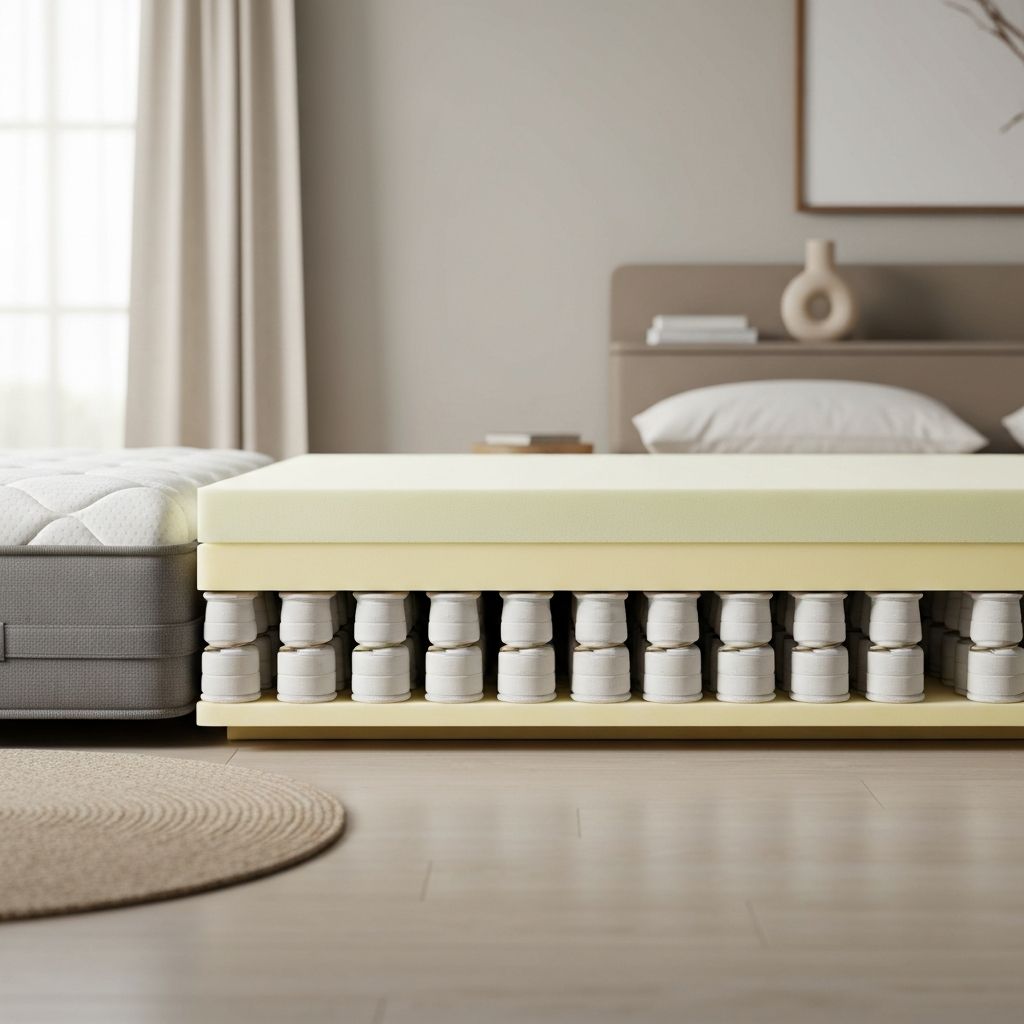
A mattress represents one of the most important purchases you can make for your health and wellbeing. You spend roughly one-third of your life in bed, making mattress quality directly relevant to sleep quality, physical comfort, and daily energy levels. With countless options available, choosing the right mattress can feel overwhelming.
Why Your Mattress Matters
The surface you sleep on affects far more than simple comfort. A supportive mattress helps maintain proper spinal alignment throughout the night, reducing morning stiffness and discomfort. Poor mattress support can contribute to back pain, poor sleep quality, and restless nights.
Beyond physical support, mattress characteristics affect temperature regulation, motion isolation, and sleep disturbances. Understanding these factors helps you identify which features matter most for your specific needs.
Major Mattress Types
Modern mattresses fall into several broad categories, each with distinct characteristics, advantages, and potential drawbacks.
Innerspring Mattresses
Traditional innerspring mattresses use metal coils as their primary support system. These remain popular for their familiar feel, breathability, and typically lower cost.
Coil types vary: Bonnell coils (hourglass-shaped), pocketed coils (individually wrapped), offset coils, and continuous wire coils each offer different feel and support characteristics. Pocketed coils generally provide better motion isolation and contouring than other coil types.
Advantages: Good breathability, responsive feel, strong edge support, lower price points available.
Potential drawbacks: Less pressure relief, more motion transfer (except pocketed coils), may develop sagging or squeaking over time.
Memory Foam Mattresses
Memory foam mattresses use viscoelastic foam that responds to body heat and pressure, conforming closely to body contours. This material was originally developed by NASA and has become extremely popular in mattresses.
Advantages: Excellent pressure relief, good motion isolation, conforms to body shape, quiet.
Potential drawbacks: Can retain heat, slower response time, may have initial off-gassing odor, can make movement more difficult.
Foam density matters: Higher density foams typically last longer and provide more support but may sleep hotter. Lower density foams may break down faster.
Latex Mattresses
Latex mattresses use either natural latex (from rubber trees) or synthetic latex for support and cushioning. These offer a responsive feel distinct from memory foam.
Advantages: Responsive and bouncy, naturally breathable, good durability, hypoallergenic (natural latex), pressure relieving.
Potential drawbacks: Higher price point, heavier weight, may feel too bouncy for some sleepers.
Natural vs. synthetic: Natural latex tends to be more durable and breathable but costs more. Synthetic latex offers similar feel at lower prices but may not last as long.
Hybrid Mattresses
Hybrid mattresses combine coil support systems with foam or latex comfort layers, attempting to offer benefits of multiple materials.
Advantages: Combines support of coils with comfort of foam, typically good breathability, strong edge support.
Potential drawbacks: Higher price point, heavier weight, quality varies significantly between brands.
Understanding Firmness
Mattress firmness describes how soft or hard the surface feels. While firmness is often discussed on a 1-10 scale (1 being extremely soft, 10 being extremely hard), these ratings lack standardization across brands.
Firmness and Sleep Position
Your primary sleep position significantly influences ideal firmness:
Side sleepers generally need softer to medium firmness that allows shoulders and hips to sink in, maintaining spinal alignment. Too firm a surface creates pressure points at these areas.
Back sleepers typically do well with medium to medium-firm surfaces that support the lower back without creating excessive pressure under the lumbar region.
Stomach sleepers often need firmer surfaces to prevent the hips from sinking too deeply, which can strain the lower back.
Combination sleepers who change positions frequently may prefer medium firmness that accommodates various positions.
Body Weight Considerations
Body weight also affects ideal firmness:
- Lighter individuals (under 130 pounds) often prefer softer mattresses that allow adequate contouring
- Average weight sleepers (130-230 pounds) typically find medium firmness comfortable
- Heavier individuals (over 230 pounds) often need firmer support to prevent excessive sinking
The Firmness-Support Distinction
Firmness describes surface feel, while support refers to how well the mattress maintains spinal alignment. A mattress can be soft yet supportive or firm yet poorly supporting. Both factors matter for comfort and health.
Features That Matter
Beyond basic type and firmness, several features can significantly affect sleep quality.
Temperature Regulation
If you tend to sleep hot, consider mattresses designed for cooling:
- Gel-infused foams can help dissipate heat
- Coil systems and latex provide better airflow than solid foam
- Open-cell foam structures breathe better than traditional memory foam
- Some covers incorporate cooling technologies
Motion Isolation
If you share a bed, motion isolation matters for undisturbed sleep. Memory foam and pocketed coils typically provide better motion isolation than traditional innersprings or latex.
Edge Support
Strong edge support means you can use the full surface of the mattress without feeling like you might roll off. Coil systems and reinforced foam perimeters typically provide better edge support.
Durability
Mattress lifespan varies significantly by type and quality:
- Higher-density foams last longer than lower-density options
- Quality latex can last 15+ years
- Good innersprings typically last 7-10 years
- Budget mattresses may show wear after just a few years
The Buying Process
Armed with knowledge about mattress types and features, several practical considerations affect your purchase.
Testing Mattresses
If possible, test mattresses in person. Spend at least 10-15 minutes lying in your usual sleep position. However, recognize that brief store testing cannot fully simulate actual sleep experience.
Trial Periods
Many mattress companies offer sleep trials ranging from 30 to 365 nights. These allow you to test the mattress in your home over an extended period. Understand return policies and any associated fees before purchasing.
Budget Considerations
While expensive mattresses are not always better, extremely cheap options often compromise on durability and materials. Mid-range mattresses often offer the best value for long-term use.
When to Replace
Consider replacing your mattress if you notice visible sagging, feel springs through the surface, wake with stiffness or pain that improves after getting up, or if the mattress is over 7-10 years old.
Making Your Decision
The best mattress is ultimately the one that provides you with comfortable, restorative sleep. Consider your sleep position, body type, temperature preferences, and any specific concerns like back pain or motion transfer. Use trial periods when available to ensure your choice works for actual sleep, not just initial impressions.
Tags
Written by
Sarah Mitchell
A contributing writer at SleepWell Daily. Our team is dedicated to providing well-researched, accurate, and helpful content to our readers.
Learn more about our teamRelated Articles
Best Pillows for Every Sleep Position: A Complete Guide
Find your perfect pillow match based on how you sleep. Learn which pillow types and lofts work best for side, back, and stomach sleepers.

Sleep Tracker Guide: What They Measure and How Accurate They Are
Understand how consumer sleep trackers work, what they can and cannot tell you, and how to use this data to improve your sleep.
Weighted Blankets: Benefits, Science, and How to Choose
Explore the research behind weighted blankets, understand who benefits most, and learn how to select the right weight and material for your needs.