Blackout Curtains: Your Guide to a Darker Bedroom
Learn why darkness matters for sleep, how blackout curtains work, what to look for when buying, and installation tips for maximum effectiveness.
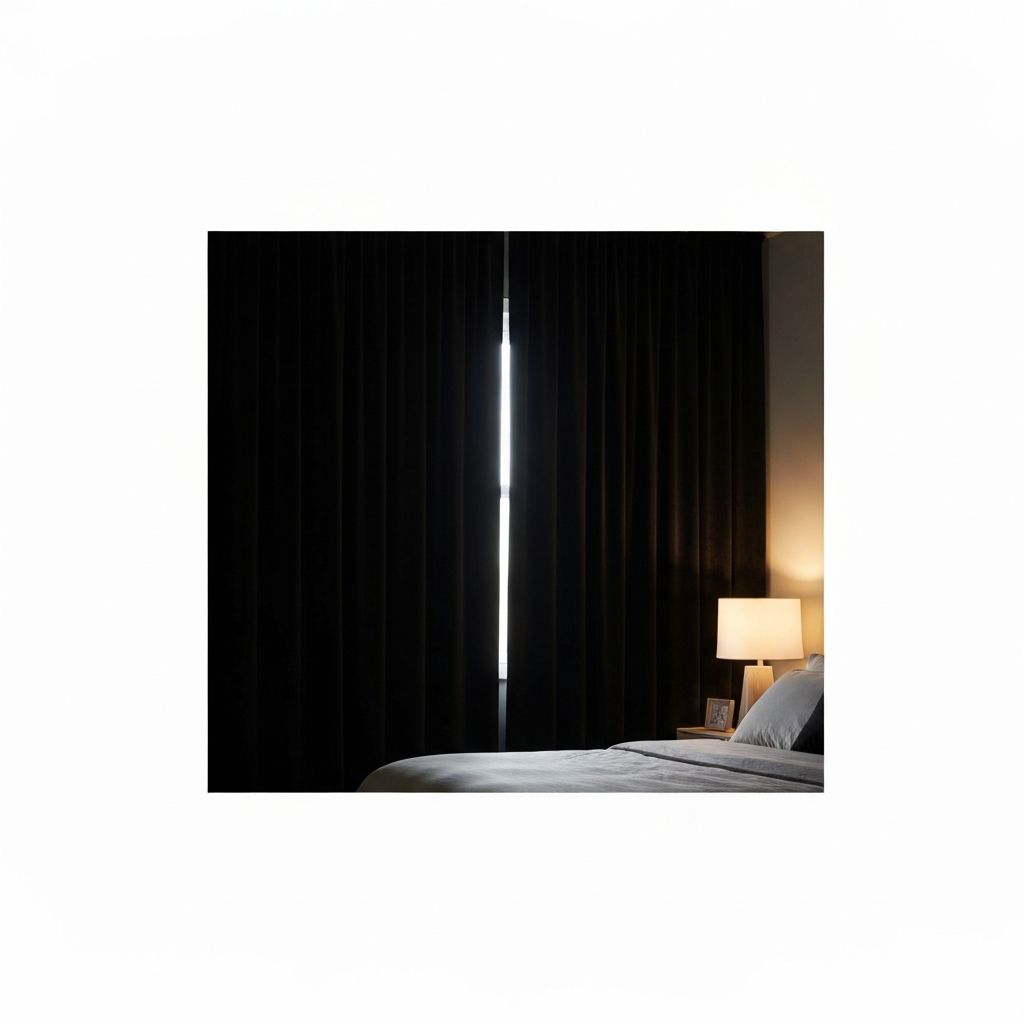
Light is one of the most powerful signals affecting your sleep. Even small amounts of light in your bedroom can disrupt melatonin production and reduce sleep quality. Blackout curtains offer a practical solution for creating the dark environment your body needs for optimal rest.
Why Darkness Matters for Sleep
Your circadian rhythm is primarily regulated by light exposure. When your eyes detect light—even through closed eyelids—it signals your brain to suppress melatonin production and promote wakefulness.
Research shows that sleeping in a light-polluted room is associated with:
- Reduced sleep quality and duration
- Increased risk of depression
- Higher rates of obesity
- Elevated cardiovascular risk
How Blackout Curtains Work
True blackout curtains use one or more methods to block light:
Tightly Woven Fabric
Dense weave prevents light from passing through the fabric itself.
Foam or Rubber Backing
A coating on the back of the curtain blocks light and often provides additional insulation.
Multiple Layers
Some curtains combine a decorative front layer with a blackout liner.
Blackout Lining
Separate blackout liners can be added behind existing curtains.
Blackout vs. Room-Darkening
These terms are often confused:
Blackout curtains: Block 99-100% of light when properly installed Room-darkening curtains: Block 95-99% of light, allowing some glow
For most sleep purposes, either works well. True blackout becomes important for:
- Shift workers sleeping during daylight
- People with high light sensitivity
- Rooms with direct sunlight exposure
What to Look For When Buying
Light Blocking Percentage
Look for curtains rated to block at least 99% of light. Manufacturer claims vary in accuracy, so read reviews.
Coverage
Curtains must be wide enough and long enough to cover your entire window with overlap. Measure your window and add:
- 8-12 inches on each side
- 4-6 inches above the frame
- Curtains should reach the floor or sill
Return Depth
The "return" is how far the curtain wraps around to the wall. Deeper returns prevent light leaks at the sides.
Color
Darker colors typically block more light, but modern blackout technology works with lighter fabrics too. Check the backing—it should be opaque.
Additional Benefits
Many blackout curtains also provide:
- Thermal insulation (reducing energy costs)
- Noise reduction
- UV protection for furnishings
Installation for Maximum Effectiveness
Even the best curtains fail if installed poorly. Follow these principles:
Mount High and Wide
Install the curtain rod 4-6 inches above the window frame and 8-12 inches beyond each side. This prevents light from entering above and beside the curtains.
Use Return Brackets
These hold the curtain flush against the wall at the sides, eliminating side light gaps.
Consider a Ceiling Mount
For maximum light blocking, mount the rod at ceiling height rather than above the window.
Mind the Bottom Gap
If your curtains don't reach the floor, light will enter below. Choose floor-length curtains or use a weighted hem to keep them in place.
Velcro Strips
For extreme light blocking (shift workers, etc.), velcro strips along the edges can seal curtains to the wall.
Alternatives to Traditional Blackout Curtains
Blackout Blinds
Roller or cellular blinds with blackout backing offer a cleaner look but may have more light leaks at edges.
Blackout Liner Panels
Add to existing curtains you like. More affordable but may not hang as cleanly.
Temporary Blackout Film
Adhesive film that sticks to windows. Good for renters but may leave residue.
Travel Blackout Solutions
Portable blackout blinds with suction cups work well for travel or temporary needs.
Special Considerations
Children's Rooms
Blackout curtains help children sleep during long summer evenings. However, some morning light can help establish healthy wake times.
Waking Up
Complete darkness can make morning waking difficult. Consider:
- Light-gradually-increasing alarm clocks
- Smart curtains that open on a schedule
- Leaving a small gap for morning light
- Timer-controlled bedside lamps
Aesthetic Concerns
Modern blackout curtains come in many styles, from sleek minimalist to traditional. You no longer have to sacrifice aesthetics for function.
The Bottom Line
Blackout curtains are one of the simplest and most effective improvements you can make to your sleep environment. Combined with proper installation, they create the darkness your body needs for quality rest. For shift workers, light-sensitive sleepers, or anyone in a light-polluted area, they're particularly valuable.
Tags
Written by
Sarah Mitchell
A contributing writer at SleepWell Daily. Our team is dedicated to providing well-researched, accurate, and helpful content to our readers.
Learn more about our teamRelated Articles
White Noise Machines: Do They Really Help You Sleep?
Explore the science behind white noise for sleep, different types of sound machines, who benefits most, and how to choose the right one for your needs.

The Complete Sleep Mask Buying Guide
From materials to fit, discover everything you need to know about choosing a sleep mask that blocks light effectively without causing discomfort.
The Ideal Bedroom Temperature for Sleep
Discover why temperature matters so much for sleep quality, the optimal range for most people, and products and strategies to achieve the perfect sleep temperature.