The Ideal Bedroom Temperature for Sleep
Discover why temperature matters so much for sleep quality, the optimal range for most people, and products and strategies to achieve the perfect sleep temperature.
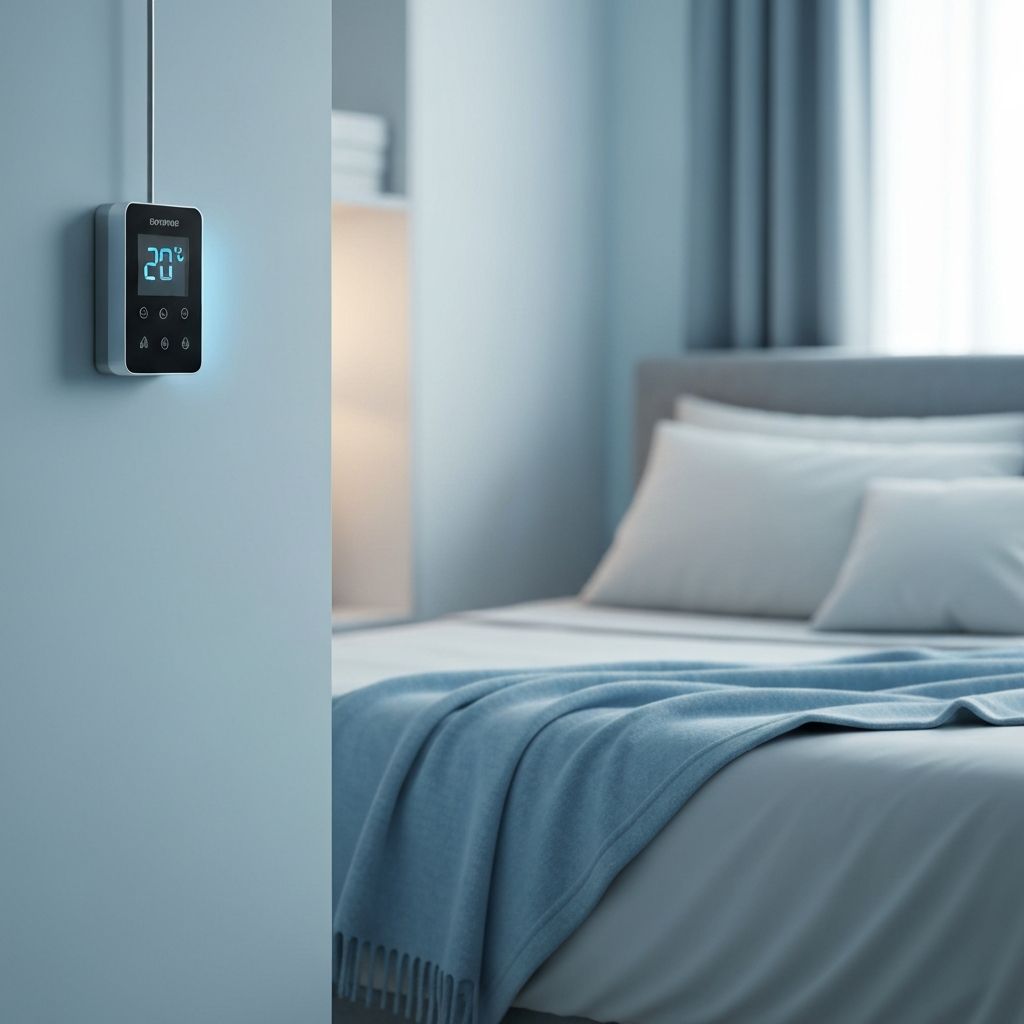
Temperature is one of the most overlooked factors affecting sleep quality. Your body has evolved to sleep in specific thermal conditions, and getting this wrong can significantly impact how well you rest. Here's what science tells us about sleeping temperature and how to optimize yours.
Why Temperature Matters for Sleep
Your body temperature naturally drops as you prepare for sleep. This cooling process is a crucial signal to your brain that it's time to rest. The process involves:
Evening: Core body temperature begins dropping 1-2 hours before your natural sleep time Sleep onset: Temperature continues falling, helping trigger drowsiness Deep sleep: Body temperature reaches its lowest point (about 1-2°F below daytime average) Morning: Temperature rises, helping trigger natural waking
When your environment is too warm, it interferes with this natural cooling process, making it harder to fall asleep and reducing sleep quality.
The Optimal Temperature Range
Most sleep researchers recommend bedroom temperatures between 60-67°F (15-19°C) for adults. The most commonly cited ideal is around 65°F (18°C).
However, this varies by individual:
- Older adults may prefer slightly warmer temperatures
- Children and infants need different ranges
- Personal preference matters within the optimal range
- Bedding and sleepwear affect ideal room temperature
Signs Your Bedroom Is Too Warm
- Difficulty falling asleep
- Waking up sweating
- Restless sleep with frequent position changes
- Throwing off covers during the night
- Feeling groggy despite adequate sleep time
- Vivid or disturbing dreams (heat can increase REM sleep intensity)
Signs Your Bedroom Is Too Cold
- Difficulty relaxing muscles to fall asleep
- Waking up from cold
- Curling into tight positions
- Needing to use the bathroom more often (cold increases urination)
- Morning congestion or sore throat
Products for Temperature Control
Cooling Mattresses
Modern mattresses address temperature with:
- Gel-infused memory foam: Draws heat away from the body
- Latex: Naturally more breathable than traditional foam
- Innerspring/hybrid: Allow more airflow than solid foam
- Phase-change materials: Absorb and release heat to maintain stable temperature
Mattress Toppers
If you like your mattress but it sleeps warm:
- Cooling gel toppers
- Latex toppers
- Wool toppers (naturally temperature-regulating)
Cooling Mattress Pads
Active cooling systems that circulate water or air through the mattress surface. These allow precise temperature control but are more expensive.
Bedding
Sheets: Look for breathable materials:
- Percale cotton (crisp, breathable weave)
- Linen (highly breathable, moisture-wicking)
- Bamboo/Tencel (cooling and moisture-wicking)
- Avoid flannel or high-thread-count sateen if you sleep hot
Comforters and blankets:
- Down alternative with cooling technology
- Wool (naturally temperature-regulating)
- Weighted blankets with cooling covers
Pillows
Memory foam pillows often trap heat. Consider:
- Shredded latex or foam (more airflow)
- Buckwheat pillows (excellent airflow)
- Cooling gel pillows
- Pillows with ventilation channels
Sleepwear
What you wear (or don't) affects temperature:
- Moisture-wicking fabrics
- Loose-fitting styles
- Natural fibers like cotton or bamboo
- Temperature-regulating technical fabrics
Environmental Strategies
Air Conditioning
The most direct solution. Set it to 65-68°F before bed. Programmable thermostats can warm the room before you wake.
Fans
Create airflow that helps evaporate sweat and cool the body. Ceiling fans, box fans, or tower fans all work.
Ventilation
Open windows when outdoor temperatures allow. Cross-ventilation creates cooling airflow.
Humidity Control
High humidity makes heat feel worse by preventing sweat evaporation. Keep bedroom humidity between 30-50%.
Blocking Heat Sources
- Close blinds during the day to prevent solar heating
- Turn off electronics that generate heat
- Use LED bulbs instead of incandescent
Tips for Hot Sleepers
If you consistently sleep warm:
- Take a warm shower 1-2 hours before bed (triggers cooling response)
- Keep a glass of cold water by the bed
- Use a cooling pillow or mattress pad
- Sleep with minimal clothing or nude
- Use lightweight, breathable bedding only
- Consider separate blankets if your partner sleeps cooler
Tips for Cold Sleepers
If you consistently sleep cold:
- Wear socks to bed (warm feet help overall temperature regulation)
- Use flannel sheets or a mattress pad
- Layer blankets so you can adjust easily
- Keep sleepwear near the bed to put on if needed
- Consider an electric blanket (turn off or to low before deep sleep)
Special Considerations
Hot Flashes
Menopause-related hot flashes require extra cooling strategies. Consider moisture-wicking sleepwear and bedding, along with cooling mattress pads.
Partners with Different Preferences
When partners have different temperature needs:
- Use dual-zone heated/cooled mattress pads
- Each partner uses their own blanket
- Compromise on room temperature and adjust bedding
- Consider fans on one side of the bed
The Bottom Line
Temperature is a controllable factor that significantly impacts sleep quality. Most people sleep best in a cool room (60-67°F) with bedding appropriate for their individual temperature needs. If you're not sleeping well, evaluating your thermal sleep environment is a worthwhile investment of time and potentially money for temperature-regulating products.
Tags
Written by
Sarah Mitchell
A contributing writer at SleepWell Daily. Our team is dedicated to providing well-researched, accurate, and helpful content to our readers.
Learn more about our teamRelated Articles
White Noise Machines: Do They Really Help You Sleep?
Explore the science behind white noise for sleep, different types of sound machines, who benefits most, and how to choose the right one for your needs.
Blackout Curtains: Your Guide to a Darker Bedroom
Learn why darkness matters for sleep, how blackout curtains work, what to look for when buying, and installation tips for maximum effectiveness.
Sleep Tracker Guide: What They Measure and How Accurate They Are
Understand how consumer sleep trackers work, what they can and cannot tell you, and how to use this data to improve your sleep.